Grief, Crisis & Addictions Support
Rola Shbib — Online Grief Counsellor
BSW (Hons), RSW (Ontario)
Registered Social Worker #866715 with the Ontario College of Social Workers and Social Service Workers — searchable on the OCSWSSW online register. The registration is Ontario's, which is why the title is always written here as RSW (Ontario).
Rola comes to counselling from the front lines of mental health care — crisis response, suicide prevention, and addiction and mental health support in community settings. She meets people in their hardest moments with steadiness and warmth, and brings specialized training in grief and loss through her honours degree in thanatology. Sessions are virtual, for clients in Ontario and the other provinces TEO serves.
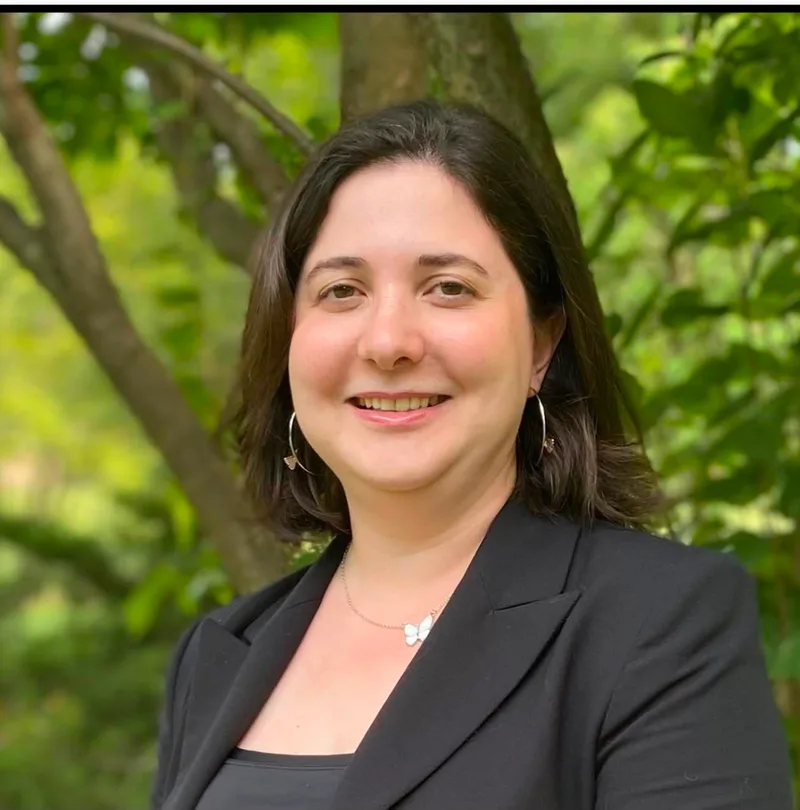
Rola Shbib
BSW (Hons), RSW (Ontario)
✓ Registered Social Worker (RSW), OCSWSSW #866715
✓ BSW (Hons), King's University College
✓ BA in Thanatology (Hons) — Grief & Loss
✓ MSW in progress, Dalhousie University
✓ Crisis Intervention & Suicide Prevention
✓ ASIST-Trained · MHFA Facilitator
✓ Trauma-Informed, Person-Centred Care
Rola Shbib, at a glance. Rola Shbib, BSW (Hons), RSW (Ontario), is a Registered Social Worker with the OCSWSSW (#866715) who sees TEO Counselling clients by video in all six provinces the practice serves. Her work centres on grief and bereavement (honours degree in thanatology), crisis intervention and suicide prevention, and addictions; she is ASIST-trained, a Mental Health First Aid facilitator, and works in English. Individual sessions are $150 for 60 minutes, no intake fee; couples sessions ($175) are with Mohamad Shabib (all six provinces) or Alison Shaji (British Columbia), who have both completed Level 1 and Level 2 Training in Gottman Method Couples Therapy. No provincial health plan covers counselling in private practice; sessions with Rola are paid per session with an insurance-ready receipt, while direct billing for Pacific Blue Cross and TELUS eClaims plans is available with Mohamad and Alison. The first step is a free 15-minute consultation by video or scheduled phone call, no referral needed.
My approach
Much of my work has been with people on the hardest day of their life — on crisis lines, in suicide prevention, and in community mental health and addiction services. That work taught me something simple and lasting: what helps most is a steady, non-judgmental presence. Someone who can sit with what's happening without flinching, and help you find your footing again. That's the presence I bring to every session.
My practice is trauma-informed, person-centred, and recovery-oriented. In plain language, that means we move at your pace, we build on the strengths that have carried you this far, and you stay the expert on your own life. Together we make a plan that fits you — not a template.
Grief holds a special place in my work. Before social work, I completed an honours degree in thanatology — the study of death, dying, and bereavement — and I'm comfortable sitting with loss in all its forms: the death of someone you love, anticipatory grief, and the quieter losses of health, identity, home, or a future you had planned on.
I also know what it means to build a life between cultures. I bring lived experience with newcomer communities to my work — because being understood in your own context changes what therapy can do.
"You don't have to be in crisis to deserve support — and if you are, you don't have to face it alone."
Areas of focus
Crisis Support & Stabilization
Steadying, practical support during and after periods of acute distress — grounding, safety planning, and rebuilding a sense of stability.
Grief & Loss
Thanatology-informed grief counselling for bereavement, anticipatory grief, and the losses that don't come with a funeral — health, identity, home, relationships.
Anxiety & Stress
Person-centred support for worry, overwhelm, and stress — understanding what drives it and building tools that actually fit your life.
Addictions & Mental Health
Recovery-oriented support drawing on front-line community mental health and addiction experience — without judgment, at your pace.
Trauma-Informed Counselling
Safety-first, paced support that honours what you've been through and never pushes you past what feels manageable.
Newcomer & Cross-Cultural Support
Counselling with genuine understanding of migration, displacement, and building a life between cultures.
Session details
What working together actually looks like
The first thing I do is find out how much room you have. Someone in the middle of a crisis and someone processing a loss from three years ago need different things in a first session, and starting the wrong one wastes a session.
Where things are acute, early work is about stabilising — sleep, eating, the immediate week, what is actually load-bearing right now. Where things are steadier, we can go into the material properly. I would rather build the ground first than open something up and leave you holding it alone until next Thursday.
What you say in session is kept confidential, with the limits every Canadian therapist works under: a risk of serious harm to you or someone else, a child in need of protection, a court order or subpoena, and the reporting obligations a regulator can impose. Those are explained in full in the first session, before anything sensitive is discussed.
Grief, and why I trained in it specifically
I hold an honours degree in thanatology — the study of death, dying and bereavement. It is an unusual thing to study deliberately, and I did it because grief is one of the few universal human experiences that people can be told they are doing wrong.
There are no stages you are supposed to move through on a timetable. Grief is not linear, it does not resolve on an anniversary, and it can arrive with things nobody warns you about: relief, anger at the person who died, guilt about the relief. None of that is a failure to grieve properly. It is grieving.
It also covers losses that are not deaths — a relationship, a country, a version of your future, a parent who is still alive but no longer knows you. Those get less social permission, which can make them harder rather than easier. That work sits alongside the grief and loss page.
Crisis work, and what it left me with
Much of my background is front-line: crisis response, suicide prevention, and community mental health and addiction services. That work teaches a particular kind of steadiness — you become difficult to alarm, and you learn that the most useful thing in the room is calm rather than urgency.
Practically, it means you can say the frightening thing out loud without watching me react to it. You may test that in the first session without realising, and it is a reasonable thing to test for.
One thing to be clear about: therapy is not a crisis service, and a weekly appointment is not the right container for immediate danger. If you are in crisis right now, call or text 9-8-8 (Canada, 24/7), or call 911 if there is immediate risk. We can absolutely work on what led there — but not instead of that.
Newcomer and cross-cultural work
For newcomer and second-generation clients, working with someone who already knows the context means not having to build it before getting to the point — what was left behind, what is expected, what cannot be explained to people here without it sounding like a complaint. Clients who want sessions in Arabic can work with Mohamad, who offers therapy in English and Arabic.
I am registered as a Registered Social Worker with the Ontario College of Social Workers and Social Service Workers (OCSWSSW #866715).
Booking a session with Rola
Individual sessions are $150 for sixty minutes. The first conversation is free — 15 minutes, no referral needed, and no obligation at the end of it.
No provincial health plan in Canada covers counselling in private practice. Reimbursement through an extended health plan depends on the designation your plan covers (CCC, RCC, RSW or Registered Psychotherapist with the CRPO) — full detail is on the fees page. Rola is not on the direct-bill line; you receive an insurance-ready receipt after every session to submit yourself.
Sessions run seven days a week from noon to 9pm Pacific. Cancellations need 24 hours notice; later than that, and missed sessions, are charged in full.